
Mengenal Tradisi Rambu Solo: Upacara Pemakaman Unik dari Suku Toraja

project7alpha.com – Suku Toraja, yang mendiami daerah pegunungan di Sulawesi Selatan, Indonesia, dikenal dengan keunikan budaya dan tradisi mereka yang kaya. Salah satu tradisi yang paling mencolok dan mengesankan adalah upacara pemakaman mereka yang disebut Rambu Solo. Upacara ini bukan hanya sebuah ritual pemakaman, melainkan juga sebuah perayaan kehidupan yang melibatkan komunitas secara keseluruhan.

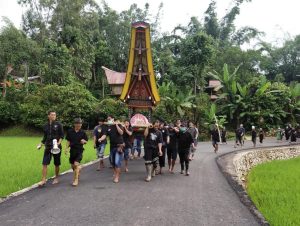
Rambu Solo adalah upacara pemakaman yang dilakukan untuk menghormati dan merayakan kehidupan seseorang yang telah meninggal dunia. Nama “Rambu Solo’” berasal dari bahasa Toraja yang berarti “pengantar roh”. Upacara ini tidak hanya berfungsi untuk menguburkan jenazah, tetapi juga sebagai kesempatan untuk menunjukkan penghormatan terakhir kepada almarhum dan mempererat hubungan sosial antara keluarga dan masyarakat.

Proses Upacara Rambu Solo

mengenal-tradisi-rambu-solo-upacara-pemakaman-unik-dari-suku-toraja

Upacara Rambu Solo biasanya berlangsung dalam beberapa hari dan melibatkan berbagai tahapan yang rumit. Berikut adalah beberapa aspek penting dari upacara ini:

  1. Persiapan: Persiapan untuk Rambu Solo bisa memakan waktu beberapa bulan hingga bertahun-tahun, tergantung pada status sosial dan kekayaan keluarga almarhum. Keluarga akan mengumpulkan dana untuk membiayai upacara, yang sering kali melibatkan pengorbanan hewan seperti babi dan kerbau.
  2. Upacara: Upacara dimulai dengan prosesi pemakaman yang melibatkan ritual pengantar roh. Jenazah akan ditempatkan dalam peti mati yang dihias dengan ornamen khas Toraja dan diletakkan di rumah duka atau dalam gua pemakaman yang terletak di tebing-tebing curam.
  3. Pengorbanan Hewan: Salah satu elemen yang paling terkenal dari Rambu Solo’ adalah pengorbanan hewan. Kerbau dan babi dipilih untuk dikorbankan sebagai simbol pengantar roh menuju kehidupan setelah mati. Jumlah hewan yang dikorbankan sering kali mencerminkan status sosial almarhum dan keluarganya.
  4. Perayaan: Selama upacara, keluarga dan komunitas berkumpul untuk merayakan kehidupan almarhum dengan tarian, musik, dan pesta. Ini adalah momen penting untuk menunjukkan rasa terima kasih kepada para tamu dan memperkuat ikatan sosial.

Makna dan Signifikansi
mengenal-tradisi-rambu-solo-upacara-pemakaman-unik-dari-suku-toraja

Tradisi Rambu Solo’ tidak hanya bertujuan untuk menghormati orang yang telah meninggal, tetapi juga untuk memperkuat kohesi sosial dan melestarikan budaya Toraja. Melalui upacara ini, masyarakat Toraja menegaskan keyakinan mereka akan adanya kehidupan setelah mati dan pentingnya hubungan antara dunia yang hidup dan yang telah tiada.

Keberlanjutan Tradisi

mengenal-tradisi-rambu-solo-upacara-pemakaman-unik-dari-suku-toraja

Meskipun modernisasi dan globalisasi telah mempengaruhi banyak aspek kehidupan di Toraja, tradisi Rambu Solo’ tetap dipertahankan dengan ketat. Upacara ini dianggap sebagai bagian integral dari identitas budaya Toraja dan terus dilestarikan oleh generasi muda.

Tradisi Rambu Solo’ adalah contoh nyata dari kekayaan budaya Indonesia yang unik dan mendalam. Dengan memahami dan menghargai tradisi ini, kita dapat lebih menghormati keragaman budaya yang ada di negara kita.

Martin Luther and the Birth of Protestantism: The Reformation

project7alpha.com – The Reformation, a pivotal movement in Christian history, began in the early 16th century and reshaped the religious and political landscape of Europe. At the heart of this transformative period was Martin Luther, a German monk and theologian whose actions and writings sparked a revolution that led to the birth of Protestantism. This article explores the life of Martin Luther, the events that ignited the Reformation, and the lasting impact of his work on Christianity and Western civilization.

The Life of Martin Luther

Born on November 10, 1483, in Eisleben, Saxony, Martin Luther was the son of a miner. His early life was marked by a strict upbringing and a strong emphasis on education. Luther attended the University of Erfurt, where he earned a master’s degree in philosophy. In 1505, following a dramatic experience during a thunderstorm, Luther entered the Augustinian monastery in Erfurt, seeking a life of penance and prayer.

Luther’s spiritual journey took a significant turn when he was sent to the University of Wittenberg to earn a doctorate in theology. It was here that he began to question the teachings of the Roman Catholic Church, particularly the doctrine of indulgences, which claimed that the forgiveness of sins could be bought with money.

The 95 Theses and the Birth of Protestantism

The turning point in Luther’s life and the catalyst for the Reformation came in 1517. In response to the sale of indulgences by the Dominican friar Johann Tetzel, Luther wrote a list of 95 statements, or theses, challenging the Church’s authority to grant forgiveness of sins. He nailed these theses to the door of the Castle Church in Wittenberg, an act that is often considered the start of the Reformation.

Luther’s theses quickly spread across Germany and Europe, thanks to the printing press, a technological innovation that allowed for the rapid dissemination of ideas. The theses sparked a debate that led to Luther’s excommunication from the Catholic Church in 1521. Despite this, Luther continued to challenge Church teachings, translating the Bible into German and advocating for a more personal relationship with God based on faith alone.

The Spread of Protestantism

The Reformation did not remain confined to Germany. It spread across Europe, with reformers like Ulrich Zwingli in Switzerland, John Calvin in France, and Henry VIII in England challenging the authority of the Pope and the Catholic Church. The movement led to the establishment of various Protestant denominations, including Lutheranism, Calvinism, and Anglicanism.

The Reformation also had profound social and political consequences. It contributed to the rise of nation-states, as monarchs embraced Protestantism to assert their independence from the Pope. The movement also led to religious wars and persecution, as Catholics and Protestants fought for dominance.

The Legacy of Martin Luther

Martin Luther’s impact on Christianity and Western civilization is immense. His insistence on the authority of Scripture over Church tradition laid the foundation for Protestant theology. His translation of the Bible into German fostered a sense of national identity and contributed to the development of the German language.

Moreover, Luther’s emphasis on justification by faith alone challenged the hierarchical structure of the Catholic Church and empowered individuals to interpret the Bible for themselves. This emphasis on personal faith and responsibility has had a lasting influence on Western thought and culture.

Conclusion

The Reformation, ignited by Martin Luther’s challenge to the Catholic Church, was a transformative movement that reshaped Christianity and Western society. Luther’s life and work continue to inspire and challenge believers and scholars alike, as they explore the implications of his teachings for contemporary faith and practice. The Reformation’s legacy is a testament to the power of ideas to change the world, and Martin Luther’s place in history is secure as one of the most influential figures in Christian history.